Frequent tire punctures shouldn’t automatically be dismissed as bad luck. Nails and road debris are common causes, but recurring air loss can also involve tread damage, valve problems, wheel issues, driving conditions, or tires that have reached a poor overall condition.
A better inspection routine helps you notice warning signs earlier and can reveal whether repeated punctures share a pattern.
Inspect the Tread Instead of Checking Pressure Alone
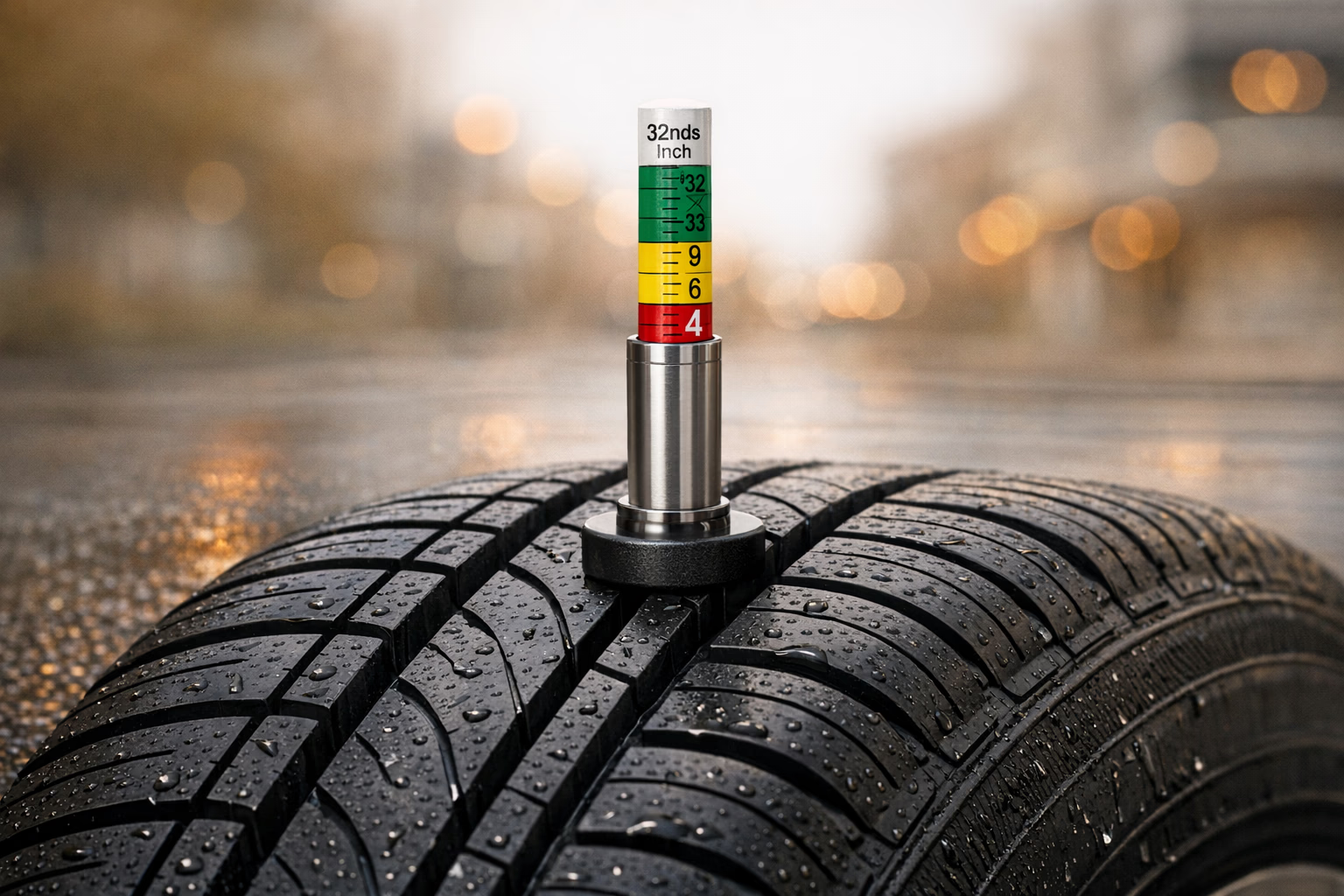
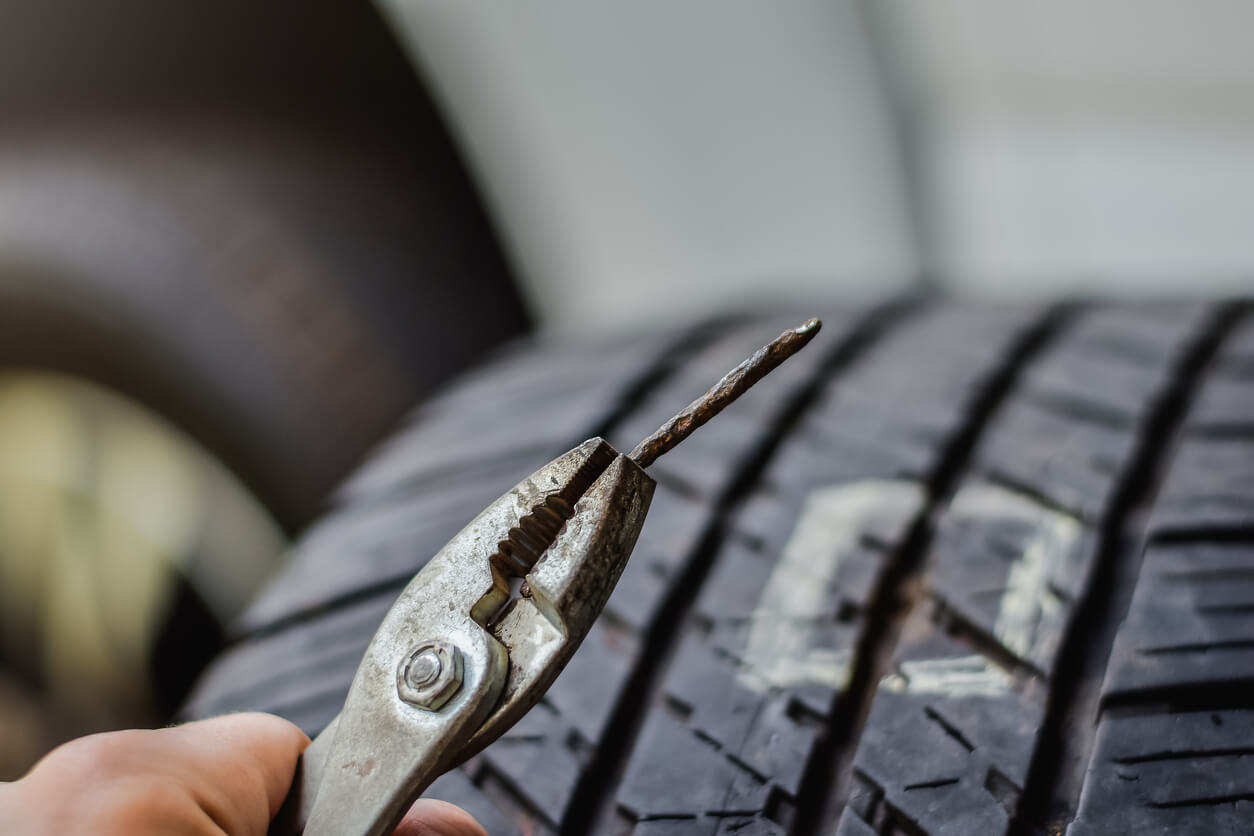
Pressure loss tells you something is wrong, but it doesn’t explain why. Look across the full visible tread for embedded screws, nails, cuts, unusual wear, bulges, cracking, or objects lodged between tread blocks.
Don’t pull out an embedded object simply to inspect it if the tire is still holding air. Removing it may turn a slow leak into faster air loss before you’re prepared to repair or replace the tire.
Drivers following automotive media coverage may encounter many tire-care tips, but the tire and vehicle manufacturers’ specifications should guide pressure and fitment decisions.
Look for a Pattern Across Multiple Punctures
Location matters. Repeated damage to one tire may point toward a local wheel, valve, or tire problem, while similar punctures across different tires may suggest roads, construction debris, parking areas, or routes with frequent sharp objects.
Record where each puncture occurred on the tire and where you had recently driven. Patterns that are invisible from memory sometimes become obvious after several incidents.
| Inspection Finding | Possible Issue | Next Move |
|---|---|---|
| Embedded object | Tread penetration | Have tire assessed |
| Sidewall damage | Structural concern | Avoid DIY plugging |
| Repeated low pressure | Slow leak possible | Check tire, valve, wheel |
| Uneven wear | Alignment or pressure issue | Inspect underlying cause |
Check Valves and Wheel Sealing Surfaces
Not every slow leak comes from a tread puncture. Valve cores, valve stems, or the sealing area between the tire and wheel can also lose air.
Information found through road-safety news sources may focus heavily on visible tire damage, yet a tire that repeatedly loses pressure without an obvious object deserves a complete leak inspection.
A qualified tire shop can identify small leaks that are difficult to locate visually and determine whether the damaged area is suitable for repair.
Pay Attention to the Roads You Use
Construction zones, workshop entrances, industrial areas, shoulders, alleys, and locations where debris accumulates may expose tires to screws, metal fragments, and sharp material more often.
That doesn’t mean every puncture can be avoided. Still, changing where you park or avoiding debris-covered road edges can reduce unnecessary exposure.
Broader general automotive publications can provide useful reminders about vehicle upkeep, but routine inspection of the roads and parking surfaces you actually use is more relevant to your personal puncture pattern.
Handle a Suspected Puncture Safely
If a tire loses pressure while driving, avoid abrupt steering or braking when traffic conditions allow. Reduce speed smoothly and move to a safe stopping location away from moving traffic.
Don’t crawl beneath a vehicle supported only by a jack. If you need to install a spare, follow the vehicle manufacturer’s procedure, use the specified lifting points, and work only on stable ground where you can stay clear of traffic.
When conditions are unsafe, roadside assistance is the safer choice.
What Drivers Often Get Wrong About Repeated Flats
A common mistake is assuming every puncture can be fixed with the same plug or sealant. Repairability depends on where the damage occurred, its extent, the condition of the tire, and the repair method.
Another mistake is repeatedly adding air without investigating why pressure keeps falling. That restores pressure temporarily but doesn’t correct the leak. Frequent punctures also shouldn’t distract from wear, sidewall condition, alignment, or wheel damage that may be developing at the same time.
Frequently Asked Questions
Can a nail in a tire cause a slow leak?
Yes. Some penetrations allow air to escape gradually, particularly while the object remains lodged in the tread. A tire that repeatedly needs air should be inspected rather than continually topped up.
Should every punctured tire be repaired?
No. Whether a tire can be repaired depends on the damage location, size, tire condition, and accepted repair practices. Sidewall or structural damage may require replacement instead.
Why does the same tire keep losing air?
Possible causes include another penetration, an incomplete previous repair, a valve leak, wheel sealing problems, or additional tire damage. Repeated loss from the same wheel deserves a complete inspection.
Find the Cause Instead of Repeating the Fix
Frequent tire punctures become easier to manage when you treat them as a pattern rather than isolated annoyances. Inspect the tread, note where damage occurs, watch for recurring pressure loss, and include valves and wheels in the investigation.
Temporary inflation can get attention back on the tire, but it doesn’t explain the leak. Finding the actual source is what prevents the same problem from becoming your normal routine.