An engine that repeatedly runs too hot needs attention because excessive heat can lead to expensive mechanical damage. The cooling system controls engine temperature through coolant circulation, airflow, and heat transfer. Low coolant, leaks, cooling-fan problems, thermostat faults, radiator restrictions, and other issues can all contribute, so repeated overheating shouldn’t be treated as normal.
Stop Safely Before Inspecting Anything
If the temperature gauge rises into an abnormal range or a warning appears, reduce the chance of further damage by stopping in a safe location as soon as conditions allow. Follow the vehicle manufacturer’s instructions for an overheating warning.
Never remove a radiator or pressurized coolant cap while the engine is hot. Hot coolant and steam can cause serious burns. General automotive reading online doesn’t replace the safety procedures in the owner’s manual for the specific vehicle.
Check Coolant Only After the Engine Cools
Once the engine has cooled sufficiently according to manufacturer guidance, coolant level and visible signs of leakage can be checked. A low level may indicate a leak rather than coolant that simply “disappeared.”
Look for wet areas, staining, damaged hoses, or coolant beneath the vehicle. Different vehicles use specific coolant formulations, so don’t assume any coolant is suitable. Broader maintenance-focused resources can provide context, but the owner’s manual should determine the required fluid specification.
Don’t Ignore Small Leaks
A minor leak may become more noticeable only when the system is hot and pressurized. That can make a vehicle appear dry after it has been parked.
Repeatedly topping off coolant without finding why the level falls can hide the symptom while the underlying fault continues.
Check Airflow and Coolant Circulation
Overheating that happens mainly in slow traffic may point technicians toward airflow-related issues such as a cooling fan that isn’t operating correctly. Overheating under other conditions may involve coolant circulation, the thermostat, radiator condition, water-pump operation, or another fault.
Diagnosis depends on the vehicle and symptoms. People comparing general information sources should avoid replacing parts based only on an online symptom match.
| Pattern | Possible Area to Check | Practical Response |
|---|---|---|
| Coolant keeps dropping | Leak | Inspect system |
| Hot mainly in traffic | Cooling airflow | Check fan operation |
| Temperature rises repeatedly | Circulation or control issue | Diagnose cooling system |
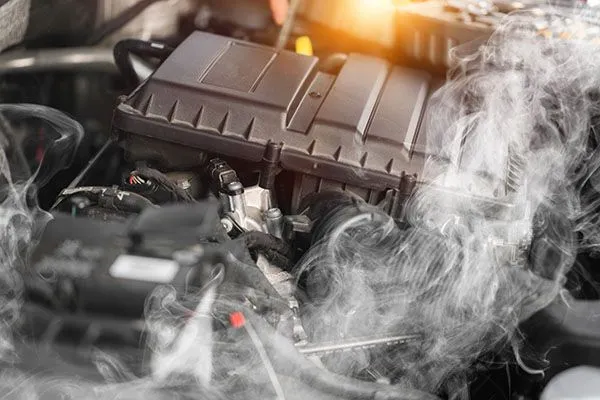
| Visible steam | Serious overheating | Stop safely |
Mistakes That Can Make Overheating Worse
Continuing to drive because the vehicle “still feels normal” can turn a cooling-system problem into more serious engine damage. Temperature warnings deserve attention even when the engine hasn’t started making unusual noises.
Opening a hot cooling system is another dangerous mistake. So is repeatedly adding coolant without investigating recurring loss.
Avoid randomly replacing thermostats, fans, sensors, or pumps. Similar overheating symptoms can come from different failures, and unnecessary parts replacement can cost more than proper diagnosis.
Frequently Asked Questions
Can low coolant make an engine overheat?
Yes. Insufficient coolant can reduce the system’s ability to carry heat away from the engine. If the coolant repeatedly becomes low, the reason for the loss should be investigated rather than relying on continual top-ups.
Why does my car overheat only in traffic?
Reduced airflow through the radiator at low road speeds can make cooling-fan problems more noticeable. Other faults can produce similar symptoms, so the fan and the rest of the cooling system should be properly checked.
Can I drive a short distance with an overheating engine?
Continuing to drive an overheating vehicle can increase the risk of engine damage. If an overheating warning appears, follow the manufacturer’s guidance and stop safely when conditions allow rather than assuming a short distance is harmless.
Deal With Repeated Overheating Early
An overheating episode is a warning, not a maintenance routine. Let the engine cool safely, check coolant only under appropriate conditions, look for evidence of leakage, and have recurring temperature problems diagnosed. Finding a faulty hose, fan, thermostat, radiator, pump, or other cooling-system problem early can prevent a smaller repair from becoming a much larger one.