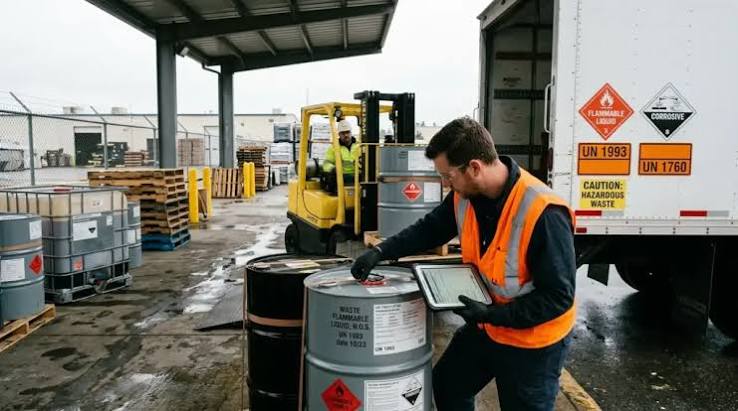
Moving hazardous waste isn’t the same as hauling ordinary trash. Before waste leaves a site, its classification, generator responsibilities, destination, documentation, and transportation requirements may need to be determined.
Improvising after a truck is loaded can create regulatory and safety problems. Identify the waste and the applicable rules first.
Determine Whether the Material Is Regulated Waste
Start with information about how the material was generated and what it contains. Labels, safety data sheets, process knowledge, laboratory analysis, inventory records, and previous waste determinations may all help.
Federal hazardous waste identification and generator requirements are largely contained within EPA’s Resource Conservation and Recovery Act regulatory framework, while authorized states can operate hazardous-waste programs with additional or stricter requirements. US EPA
Organizations reviewing responsibilities may also use legal industry information for general context, but regulatory classifications should come from applicable law and reliable waste information.
Check the Transporter Before Waste Leaves
EPA defines hazardous waste transporters as persons or entities engaged in off-site movement of hazardous waste and explains that federal transporter requirements are found in 40 CFR Part 263. EPA also notes that hazardous waste transportation is regulated in coordination with U.S. Department of Transportation requirements. US EPA
Confirm that the company selected is appropriate for the waste and transportation involved.
| Check | Record | Purpose |
|---|---|---|
| Waste identity | Characterization | Determines handling |
| Transporter | Company details | Confirms responsible carrier |
| Shipment | Manifest if required | Tracks movement |
| Destination | Facility information | Documents delivery point |
News stories and regional environmental coverage may highlight transportation incidents, but compliance decisions should be based on the specific shipment and applicable regulations.
Understand Manifest and Tracking Requirements
EPA’s hazardous waste manifest system is designed to track regulated hazardous waste from the generator to the receiving treatment, storage, recycling, or disposal facility when manifest requirements apply. US EPA
Don’t assume that a shipping receipt is automatically equivalent to every document required by environmental or transportation law.
General online community reporting may provide background discussion, yet shipment documentation should come from the generator, transporter, receiving facility, and applicable regulatory system.
Prepare for Unexpected Transportation Problems
Before shipment, determine who should be contacted if containers are damaged, paperwork is rejected, a destination won’t accept the waste, or transportation can’t continue as planned.
Make sure employees understand that potentially dangerous material shouldn’t be transferred into improvised containers or redirected casually simply to complete a shipment.
Keep the Final Records
Retain documents showing what was shipped, who transported it, and where it was delivered. Required record-retention periods depend on the applicable rules, so confirm the requirements governing the particular shipment rather than relying on a general assumption.
Mistakes That Create Avoidable Hazardous Waste Problems
One error is assuming that any licensed trucking company can automatically transport any hazardous waste. Waste regulations, hazardous-material transportation requirements, carrier qualifications, packaging, labeling, and documentation can differ.
Another problem is describing waste too casually. An incomplete or incorrect characterization at the beginning can affect every later decision, including packaging, manifests, transportation, and the receiving facility’s ability to accept the shipment.
When Regulatory or Legal Assistance Makes Sense
Get regulatory guidance before transportation if the waste classification, generator category, documentation, packaging, transporter requirements, or destination is uncertain. Don’t begin moving questionable material simply to clear space.
Spills, rejected shipments, enforcement notices, suspected improper disposal, contaminated property, or disagreements over responsibility can justify prompt advice from environmental professionals and qualified legal counsel.
Frequently Asked Questions
Does hazardous waste always require a manifest?
Manifest requirements depend on the waste, generator status, shipment, and applicable exemptions or rules. Confirm the regulatory requirements before transportation.
Can hazardous waste be temporarily held during transportation?
Federal rules provide specific conditions for transporter transfer facilities, including requirements related to manifested waste and temporary holding. The exact situation should be checked against current regulations. US EPA
Are federal hazardous waste rules the same in every state?
Not necessarily. States with authorized hazardous-waste programs may impose requirements that are more stringent or broader than federal rules. US EPA
Resolve Classification Before the Truck Moves
Hazardous waste transportation should begin only after the material, paperwork, transporter, and destination have been checked. Preserve records from generation through final delivery and address uncertainty before shipment rather than after a problem occurs. Where regulatory exposure, cleanup liability, or a transportation incident is involved, obtain guidance suited to the specific waste and jurisdiction.
This article provides general legal information and is not a substitute for advice from a qualified attorney about a specific matter.